When the first real snowfall hits Leduc, most of us think about tires and windshield scrapers. If you care for an older parent, spouse or neighbour, a different worry often takes over: will they make it to the mailbox, the car or the front step without slipping?
That worry is well founded. In Alberta, about one in three older adults falls each year, and falls are the leading cause of injury for seniors, according to Alberta Blue Cross and the Injury Prevention Centre at the University of Alberta. The encouraging part is that falls are not a normal part of aging, and a few practical changes made before deep winter can meaningfully lower the risk.
November is Falls Prevention Month in Alberta, so it’s a good time to look at your loved one’s home and routines with fresh eyes. This guide covers senior fall prevention in Leduc winters: what to check outside, inside and in everyday health habits, which local snow-clearing supports exist, and when extra help at home makes sense.
Key Takeaways
- About 1 in 3 older Albertans falls each year, but falls are not a normal part of aging.
- Icy entrances, dim lighting and the wrong footwear are the most fixable winter hazards. You can address them this week.
- Strength and balance work, a yearly eye exam and a yearly medication review lower fall risk in every season.
- Local programs can take snow clearing off your plate, and in-home care can add a steady second set of eyes.
Why winter raises the fall risk for Leduc seniors
Winter does more than add ice. It changes daily life in ways that stack up
- Hidden ice. Black ice on sidewalks, wooden steps and driveways is hard to see and easy to trust.
- Shorter days and snow glare. Eyes take longer to adjust to changes in light, and depth perception can make steps and curbs harder to judge.
- Bulky boots and coats. They change how we walk and how well we feel the ground.
- Less movement. When walkways are icy, many older adults simply stay in. Over weeks, weaker legs and poorer balance raise the risk of a fall, indoors and out.
The numbers show why this matters. The Injury Prevention Centre reports that every day in Alberta, 102 seniors are treated in an emergency department for a fall injury, and 28 of them are admitted to hospital. The average stay is about three weeks.
A winter fall prevention checklist for seniors
Outside: entrances, walkways and driveways
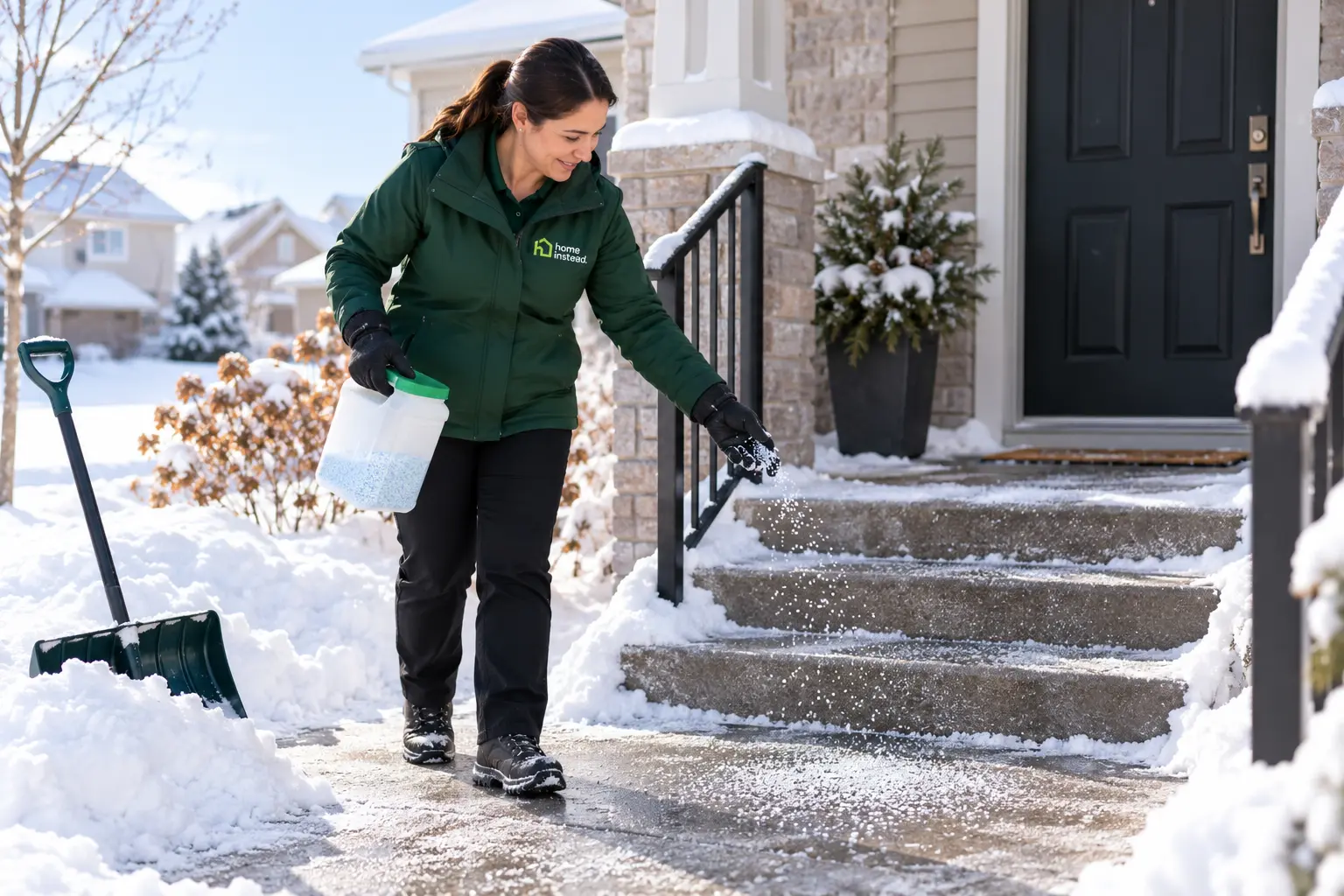
- Clear snow and spread ice melt or sand on steps, ramps and the path to the car or mailbox after each snowfall, and again after a thaw-and-freeze.
- Check that handrails are sturdy at every outdoor step, including the back door.
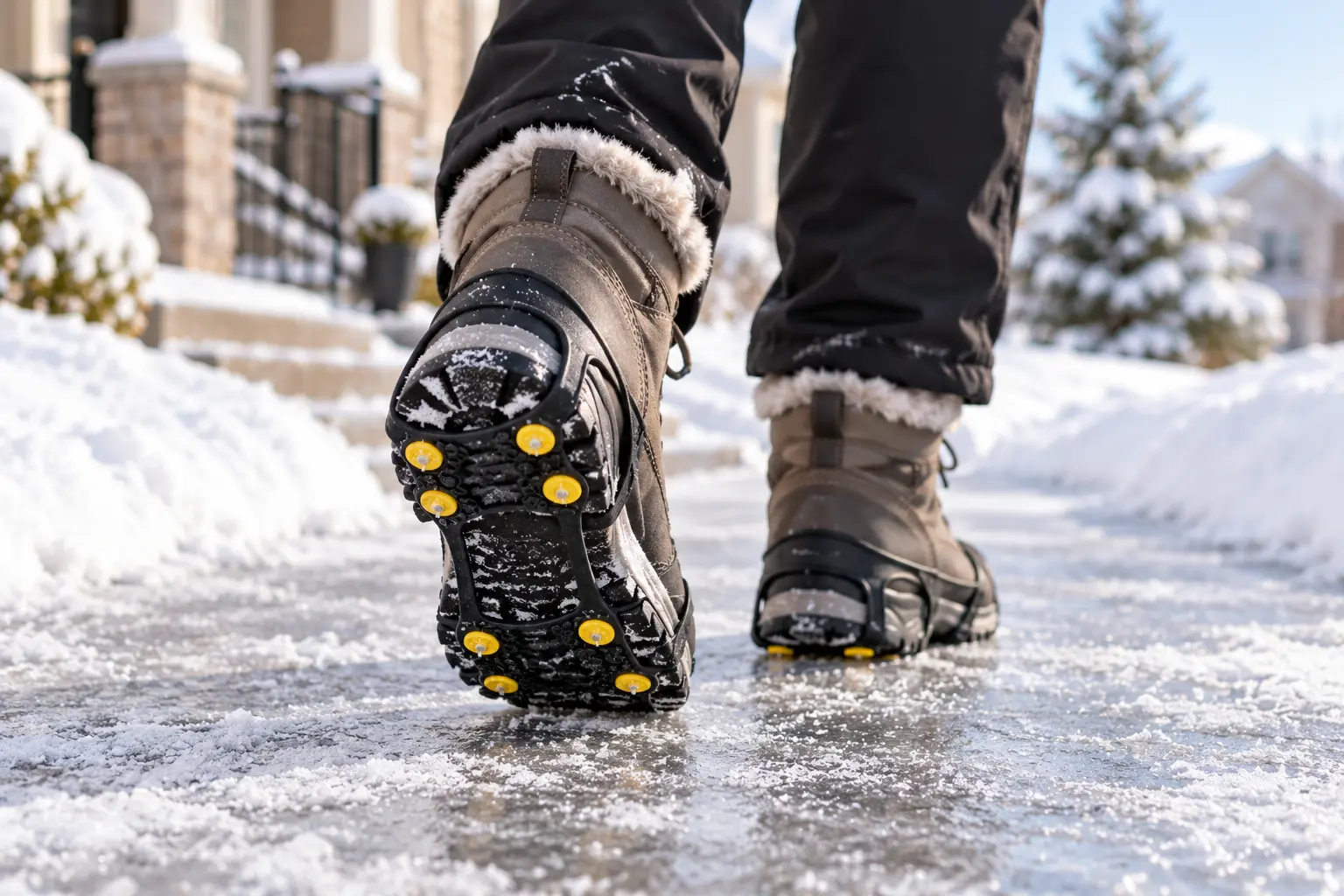
- Choose boots with good tread. Slip-on ice grips add traction on icy ground; take them off before walking on hard indoor floors.
- Use the walking technique Alberta Health Services recommends on ice: watch where you step, take shorter shuffle-like steps and keep your hands out of your pockets.
- Carry a phone, and consider a personal emergency pendant, especially if your loved one lives alone.
- Plan outings for daylight and for after sidewalks have been cleared, and arrange a ride on the worst days.
Inside: wet boots, loose mats and dim hallways
- Put a non-slip mat or boot tray at the door so melted snow doesn’t pool on the floor.
- Remove or secure loose rugs and cords, and keep pathways and stairs free of clutter.
- Add night lights or motion-sensor lights between the bedroom, bathroom and kitchen. Keep lighting similar from room to room.
- Mark the edges of stairs with contrasting colour or treads.
- In the bathroom, use a non-slip mat and consider grab bars near the toilet and tub.
- Swap loose slippers and bare socks for supportive, non-slip indoor footwear.
Your body: strength, vision and medications
- Stay active. Alberta Blue Cross, working with Finding Balance, suggests aiming for 30 minutes or more of moderate activity on at least five days a week, with balance work (such as Tai Chi or yoga) and leg-strengthening. Check with a health care provider about what is right for you.
- Get a yearly eye exam. Albertans 65 and older are covered for one eye exam per year under the Alberta Health Care Insurance Plan. Sunglasses help with snow glare, even in winter.
- Review medications once a year with a doctor or pharmacist. Some prescriptions, over-the-counter products and supplements, including those for sleep, anxiety and depression, can cause dizziness. Use one pharmacy and keep a current medication list at home and in a wallet.
- Mention dizziness. Tell a doctor about any dizziness or near-falls, even if nothing was injured.
Local help with snow and ice in Leduc and nearby communities
Whatever the City clears, the last few metres (your own step and walk) usually fall to you or a helper. A few local supports are worth knowing about:
- City of Leduc: the City’s windrow clearing program helps seniors and people with physical disabilities or medical conditions who can’t clear the windrow at the end of their driveway. Contact the City’s snow and ice line at 780-980-7133 to ask about eligibility and how to apply.
- Leduc County: the County offers free snowplowing of private driveways up to three times per season. Check the County’s winter operations page for details.
- Calmar: the Town of Calmar’s Snow Angel Program, run through FCSS, connects volunteers with seniors and people with disabilities who can’t clear snow themselves.
- Other communities: if your loved one lives in Camrose, Spruce Grove, Stony Plain, Wetaskiwin or Ponoka, ask the local FCSS office whether a volunteer snow program exists.
Signs it may be time for extra help at home
Falls often announce themselves before they happen. Consider a conversation, and possibly a care consultation, if you notice:
- Near-falls, new bruises, or comments like “I just lost my footing”
- Furniture-walking, holding walls, or avoiding the stairs
- Avoiding the outdoors when it’s icy or dark, or skipping appointments and groceries
- Trouble bathing or dressing safely
- A recent hospital stay or surgery
- A family caregiver who is exhausted, or who lives far away
How in-home care can help reduce fall risk

A fall-safe home is a team effort, and a trained Care Pro can be part of it. Home Instead Leduc’s Care Pros can help with bathing, dressing and mobility, light housekeeping that keeps floors and pathways clear, meal preparation, medication reminders, and safe accompaniment to appointments and errands so your loved one isn’t crossing an icy parking lot alone. For regular visits that also protect against isolation, see our companion care service. After a surgery or hospital stay, transitional care helps your loved one settle in safely. For families supporting someone with dementia, memory care at home keeps familiar routines in place.
Every plan starts with a conversation. A Registered Nurse Director of Care and LPN Care Managers guide care planning, education and ongoing communication, and the plan is adjusted as needs change. Here’s what that looks like in practice. During every visit, a Care Pro keeps an eye out for the small things that often come before a fall: a worn boot tread, a loose mat at the door, a hallway that’s too dim at night, or a loved one who has started holding the wall to get around. When something comes up, the Care Pro shares it with the care team, who talk it through with your family and update the plan.
How is home care funded?
Alberta’s Client Directed Home Care Invoicing (CDHCI) program lets eligible Albertans choose their provider for publicly funded home care. The usual first step is calling 811 to request an assessment from Alberta Health Services Home Care. Once approved, you can use those hours with an approved provider. Home Instead Leduc is an approved CDHCI provider and bills Alberta Blue Cross directly for approved amounts. Learn how CDHCI works in Leduc.
What to do if a fall happens
- Stay calm and don’t rush to stand up. Check for pain or injury first.
- Call 911 if there’s a head injury, severe pain, confusion, trouble moving, or if you’re alone and can’t get up.
- Even when nothing seems hurt, tell a doctor. A fall can point to a medication, vision or health issue that’s worth sorting out.
- Consider a personal emergency pendant with fall detection. It may not catch every fall, but it can be the fastest way to get help.
Frequently Asked Questions
How common are falls among seniors in Alberta?
About one in three older Albertans falls each year, and falls are the leading cause of injury for seniors, according to the Injury Prevention Centre at the University of Alberta.
What is the best way to prevent falls in winter?
Combine safer surroundings with healthier habits: clear and treat ice at entrances, wear footwear with good traction, light up hallways, stay active, and get a yearly eye exam and medication review.
Who can help clear snow for a senior in Leduc?
Start with the City of Leduc’s windrow clearing program, Leduc County’s driveway plowing for county residents, or Calmar’s Snow Angel Program if you live in Calmar. Family, neighbours and local volunteers can also help.
How do I get government-funded home care in Alberta?
Call 811 to request an Alberta Health Services Home Care assessment. If you’re approved, the CDHCI program lets you choose an approved provider such as Home Instead Leduc.
How quickly can Home Instead Leduc start care?
Many clients begin within about 48 hours, and sometimes the same day. Timing depends on care needs, location and Care Pro availability.
Talk with a local care team
Worried about a parent or spouse living alone this winter? Book a free, no-pressure care consultation with Home Instead Leduc, Spruce Grove & Camrose. Call (587) 686-8211 or request a consultation. We’re at 4812c 43A Avenue #214, Leduc, AB T9E 1P3, and we serve Leduc, Spruce Grove, Camrose, Wetaskiwin, Stony Plain, Ponoka and surrounding communities.
Sources
- Alberta Blue Cross, “Helping older Albertans stay well and independent” (updated Nov. 19, 2025), written with Finding Balance, Injury Prevention Centre, University of Alberta: https://blog.ab.bluecross.ca/lifestyle/helping-older-albertans-stay-well-and-independent
- Alberta Health Services, “Preventing slips, trips, and falls during the winter months” and Falls Prevention Month tips: https://www.albertahealthservices.ca/assets/news/wa/ne-wa-2024-12-16-preventing-slips-and-falls.pdf
- City of Leduc, Snow and Ice Control: https://www.leduc.ca/?p=10304
- Leduc County, Winter operations: https://www.leduc-county.com/living-here/roads/winter-operations
- Town of Calmar, Snow Angel Program: https://calmar.ca/community/family-and-community-support/snow-angel-program/